

TL;DR:
- Baseline out of bounds plays, or BLOB plays, are set plays near the baseline designed to create high-percentage scoring opportunities. They utilize core formations like box, stack, and 4-out 1-in, each suited to different defensive looks, with an emphasis on proper player roles, timing, and secondary options. Simplifying plays and practicing inbounder techniques improve effectiveness and adaptability against man-to-man and zone defenses.
Baseline out of bounds plays, commonly called BLOB plays, are designed set plays executed near the baseline to create high-percentage scoring opportunities through precise player movement and positioning. The passer stands within 5–10 feet of the basket, which makes every well-designed BLOB play a genuine scoring threat. Coaches who treat these situations as afterthoughts leave easy points on the table. This guide covers the key formations, step-by-step execution for man-to-man and zone defenses, and the advanced tactics that separate reliable playbooks from predictable ones.
What are the key formations in a baseline out of bounds plays guide?
BLOB plays use three core formations: box, stack, and 4-out 1-in. Each formation suits a different defensive look and offensive goal. Choosing the right one before the play starts is half the battle.
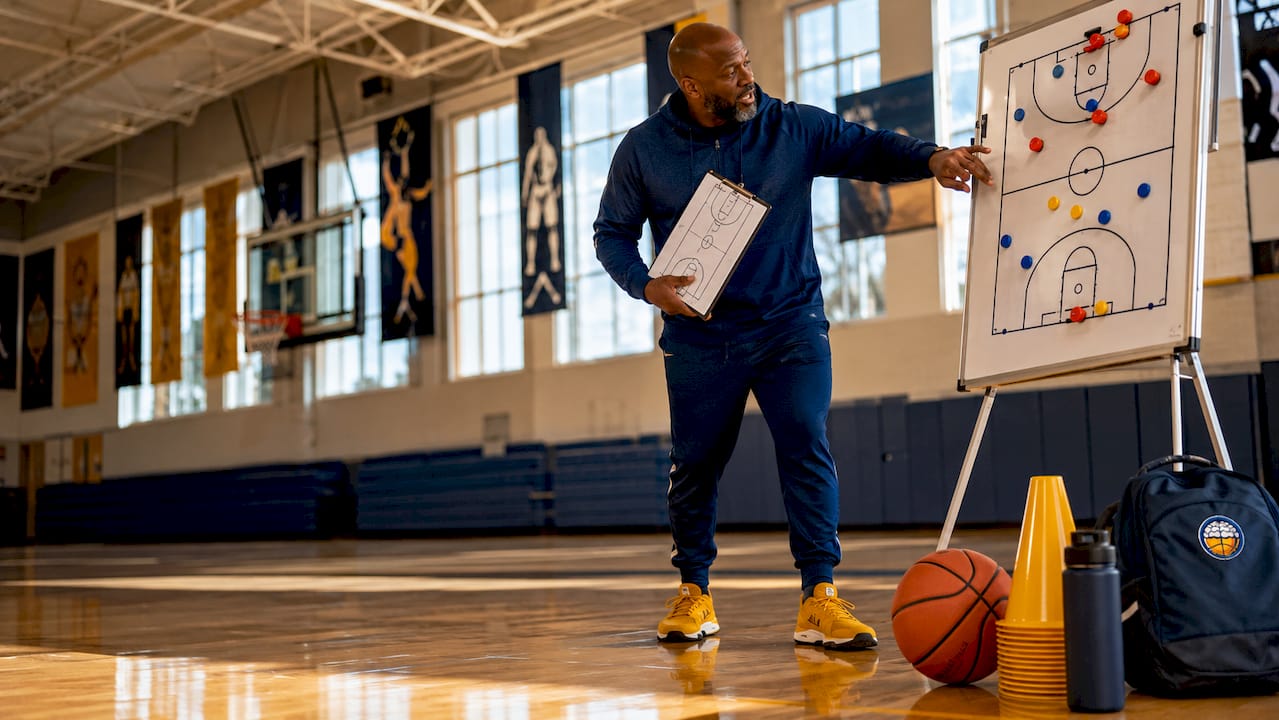
The box formation places two players on each block and two at each elbow. It gives the inbounder four immediate options and works well against both man-to-man and zone. The stack formation lines players in a single file near one block, creating sequential screens that are hard to defend when timed correctly. The 4-out 1-in formation spreads the floor with one post player sealed under the basket, which opens driving and cutting lanes.
| Formation | Best against | Main advantage | Main risk |
|---|---|---|---|
| Box | Man-to-man and zone | Multiple pass options | Requires versatile players |
| Stack | Man-to-man | Sequential screens free shooters | Timing errors collapse the play |
| 4-out 1-in | Zone | Floor spacing, post seal | Post player must win the seal |
Player roles matter as much as the formation itself. The inbounder controls the tempo and must read the defense before slapping the ball. Cutters need to sell their routes before breaking. Screeners must set legal, physical screens that force defenders to make a choice.
Pro Tip: Put your most versatile player as the inbounder. That player can receive a return pass immediately after inbounding, which adds a fifth option the defense rarely prepares for.
Sealing techniques under the basket are especially effective against zone defenses. A post player who seals the middle zone defender creates a direct path to the rim. Coaches should practice this seal as a standalone skill, not just as part of the full play.
How do you execute baseline inbound plays against man-to-man defense?
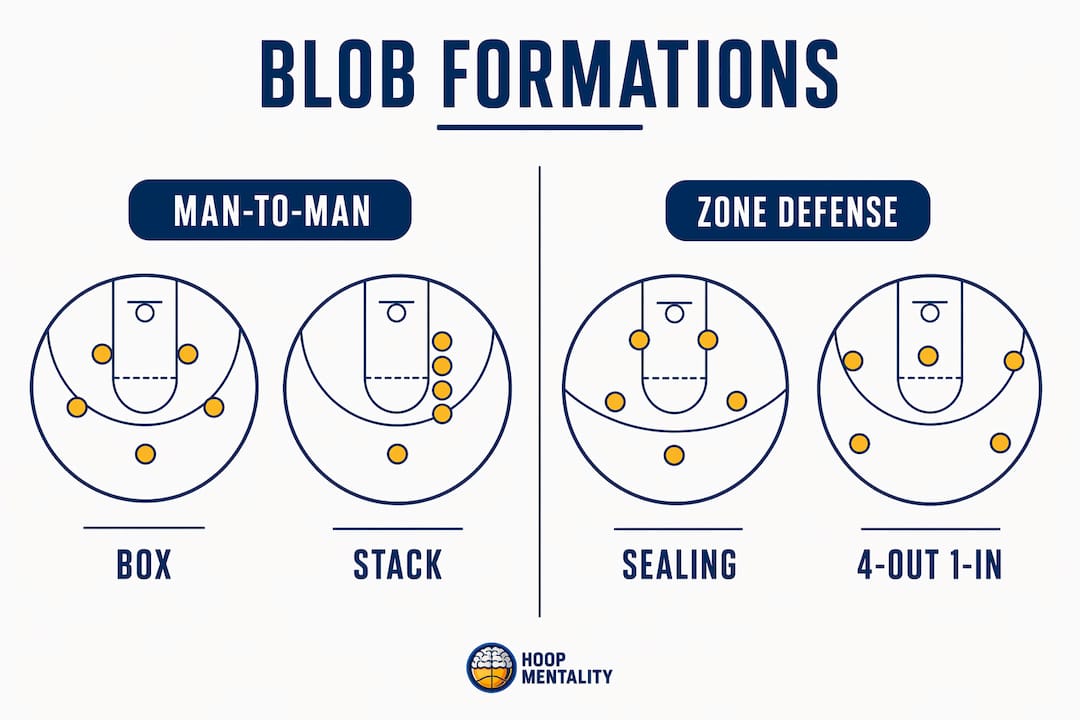
Man-to-man defense is tight and personal. Every cutter has a shadow. The goal of your inbound play strategies is to use screens and precise timing to create one clean look.
Step-by-step execution for a box set against man-to-man:
- The inbounder slaps the ball to start the clock and reads the defense immediately.
- The two block players set cross screens for the two elbow players.
- The strong-side elbow player cuts hard to the ball-side corner.
- The weak-side elbow player cuts off the screen to the paint.
- The strong-side block player pops to the wing as a secondary option.
- The inbounder looks first to the paint cut, then to the corner, then to the wing.
- If all three options are covered, the inbounder hits the popped player and the team resets.
A well-known set called “America’s Play” uses a double screen on the weak side to free a shooter cutting baseline. The shooter reads the screen, plants a foot, and cuts hard off the second screener’s hip. Timing between the screener and cutter determines whether the shot is open or contested.
The “4 Low Clear” sends all four players to the baseline, then clears one side for a single cutter to attack the rim. It works best when you have a guard who can catch and finish in traffic.
- Screens and cuts must be timed together. A cutter who moves too early gives the defender time to recover.
- The inbounder should never stare at the primary target. Eye contact with multiple players keeps defenders guessing.
- Always design a secondary option into the play. Defenses adjust, and your players need a clear fallback read.
Pro Tip: Walk through the play at half speed in practice until every player can call out the next action before it happens. Speed comes after understanding.
Understanding man-to-man offense principles helps coaches build BLOB plays that fit their existing offensive system rather than contradict it.
What adjustments optimize baseline plays against zone defenses?
Zone defenses change the geometry of every BLOB play. Defenders protect areas, not players. Your inbounding ball strategies must attack the gaps between zone defenders rather than trying to beat individual matchups.
Teams use 2-3 zone formations with screen and seal techniques to open passing lanes that the zone cannot cover without collapsing. The key adjustment is placing a player in the middle gap of the zone before the play starts. That player either receives a direct pass or draws two defenders, which opens a corner or wing option.
Zone-specific adjustments to build into your baseline playbook:
- Place your best post player on the ball-side block to seal the bottom zone defender before the inbound.
- Send a shooter to the weak-side corner. Zone defenses often leave that spot open when they rotate to the ball.
- Use a player at the free-throw line to occupy the middle zone defender and prevent help rotations.
- Design the play so the first pass goes to the free-throw line area, then immediately reverses to the weak side.
Step-by-step zone attack from a box set:
- Inbounder slaps the ball and reads the zone alignment.
- Ball-side block player seals the bottom zone defender and calls for the ball.
- Elbow player on the ball side steps into the middle gap.
- Inbounder passes to the middle gap player if open.
- Middle gap player looks immediately to the sealed post or reverses to the weak-side corner.
- Weak-side corner shooter catches and shoots before the zone can rotate.
Quick recognition is non-negotiable. Advanced teams use signals to switch from a box to a stack formation the moment they identify the defensive look. Players must know at least two formations and be ready to switch on a single word or hand signal from the inbounder.
Coaches who want to build a full system for breaking zone defenses will find that BLOB plays are most effective when they mirror the same spacing principles used in half-court zone offense.
What advanced strategies and mistakes should coaches avoid in BLOB plays?
The most common mistake coaches make is designing plays that are too complex to execute under game pressure. Simple screen actions and reactive reads consistently outperform elaborate choreography when the clock is running and the crowd is loud. A play with two clear options executed perfectly beats a play with five options executed poorly.
Common mistakes that reduce BLOB play effectiveness:
- Predictable inbounding patterns. If you always look to the same player first, defenders will cheat to that spot.
- Poor timing between screeners and cutters. A screen set too early gives the defender time to fight through it.
- No secondary option built into the play. When the primary read is covered, players freeze.
- Inbounder telegraphing the pass direction with their eyes or body before the ball is released.
Inbounder eye contact is one of the most undercoached details in basketball. An inbounder who stares at the intended receiver tips the pass to every defender in the area. Train your inbounder to scan the full court and hold the ball at chest height, not cocked to one side.
“The best BLOB play is the one your players can run correctly under pressure, not the one that looks best on a whiteboard.”
Late-game scenarios require a specific design choice: the play must reliably get the ball to your best free-throw shooter when the defense is aggressively denying every pass. Build that option into every end-of-game BLOB set. Reliability matters more than creativity when the score is close.
Signals to switch formations mid-play require players to know at least two fallback options for every set. Teach this in practice by calling out defensive looks and having players adjust on the fly. That kind of flexibility separates prepared teams from reactive ones.
Understanding types of basketball screens gives coaches the vocabulary to teach the specific screen actions that make BLOB plays work, from back screens to cross screens to down screens.
Pro Tip: Film your BLOB plays in practice and review them with players. Seeing their own timing errors is more effective than hearing about them.
Key takeaways
Effective baseline out of bounds plays combine the right formation, precise timing, and built-in secondary options to create reliable scoring chances near the basket.
| Point | Details |
|---|---|
| Choose the right formation | Match box, stack, or 4-out 1-in to the defensive look before the play starts. |
| Train inbounder technique | Eye contact across the court prevents defenders from reading the pass direction. |
| Build in secondary options | Every play needs a fallback read so players never freeze when the primary is covered. |
| Adjust for zone defenses | Seal the middle gap and use weak-side spacing to attack zone rotations. |
| Keep plays simple | Simple, well-rehearsed sets outperform complex ones under game pressure. |
Why simple BLOB plays win more games than you think
Coaches often ask me which BLOB play is the best. My honest answer is always the same: the one your players can run without thinking. I have seen teams with elaborate playbooks fall apart in the fourth quarter because players hesitated on reads they had not fully internalized. I have also seen teams with three solid BLOB sets score consistently in late-game situations because every player knew exactly where to go and when.
The detail that changes everything is the inbounder. Most coaches spend practice time on the cutters and screeners, but the inbounder controls the entire play. An inbounder who reads the defense, holds eye contact with the full court, and stays ready to receive a return pass is worth more than any clever formation. Train that position with the same attention you give your point guard.
My other strong belief is that zone adjustments should be practiced as often as man-to-man sets. Defenses switch looks specifically to disrupt your BLOB plays. If your players only know one version of each set, a zone look will stop them cold. Give them a signal, give them a fallback, and practice the switch until it is automatic.
Adaptability is the real skill. The formation is just the starting point.
— Dejan
Build your BLOB playbook with Hoopmentality resources
Hoopmentality has the tools to put your baseline play system into practice right away.
The Big Man Dual Action Drill develops the post player skills your BLOB plays depend on, including sealing, catching under pressure, and finishing near the basket. Strong post play turns a good baseline set into a consistent scoring option. Pair that with the Basketball Practice Plan Template to build structured sessions that integrate BLOB reps alongside your full offensive system. Both resources are built for coaches who want to save time and run better practices.
FAQ
What does BLOB stand for in basketball?
BLOB stands for Baseline Out of Bounds. It refers to any set play run from the baseline when the ball is awarded out of bounds near the basket.
What is the most effective baseline out of bounds formation?
The box formation is the most versatile because it gives the inbounder four immediate options and works against both man-to-man and zone defenses.
How do you beat aggressive denial defense on a BLOB play?
Design the play to get the ball to your best free-throw shooter through a back screen or curl cut. Reliable delivery to that player is the priority in late-game denial situations.
How many BLOB plays should a team carry in their playbook?
Three to five well-rehearsed sets are enough for most teams. More plays create confusion; fewer plays with multiple options and formation switches cover most defensive looks.
How do you practice BLOB plays effectively?
Run each set at half speed first so players can call out every action before it happens. Then add live defense and film the reps so players can see their own timing errors.